Brand deep-dives
Huawei battery review: LUNA2000
Huawei: battery modules that keep working when one faults, and two badges that change who you ring.
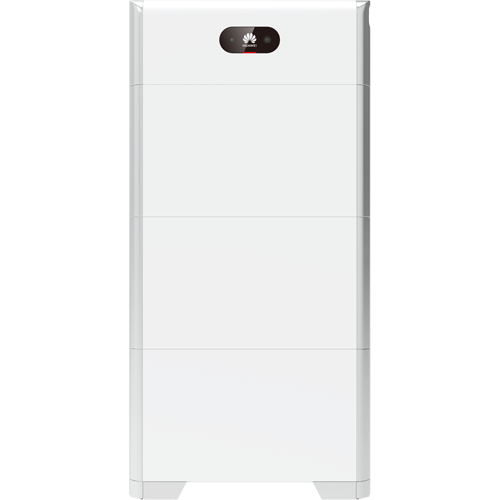
- 5 to 15 kWh
- Add modules later
- 10-year warranty
The LUNA2000 is a DC-coupled tower: a power control module on top and identical battery modules beneath, listed in Australia as 5, 10 and 15 kWh systems. It runs only with Huawei’s SUN2000 hybrid inverters and suits owners who want a quiet battery near living areas. The same hardware is mostly retailed here under the iStore name, so the support chain is part of the purchase.
By Kieron Taylor, Founder, Solar Select · Updated · 6 min read
The verdict
A well-engineered, near-silent modular battery with a fault-tolerant design and a very large parent company behind it. It commits you to a Huawei inverter, and in Australia it asks one extra question about which badge, and which support chain, you are buying.
Best for: Homes that run or are happy to run a SUN2000 hybrid inverter, want a quiet unit close to the house, and will size the stack properly at the outset.
Look elsewhere if: You want to keep a non-Huawei inverter, need seamless blackout switchover for sensitive equipment, or would rather not rely on cloud monitoring to keep warranty cover intact.
Module count, the SUN2000 inverter specified and whether the backup box is included move a Huawei quote. The section on quote factors goes through each.
The 30-second take
- Independent modules. Each battery module carries its own management electronics, so a single fault is isolated and the others keep running.
- Huawei inverter only. The LUNA2000 is DC-coupled to SUN2000 hybrid inverters, which means an existing inverter from another brand comes out on a retrofit.
- Backup is extra hardware. Blackout supply needs the separate backup box, and SolarQuotes’ review reports the changeover takes a moment.
- A connected warranty. Huawei’s policy gives the battery pack 10 years with 60% capacity remaining at the end, and expects the system to stay linked to FusionSolar.
- Check the badge. Most Australian retailers now stock the same hardware as iStore, so confirm which company handles a claim on the unit you are quoted.
Huawei at a glance
Each row is read from the source beside it, on the date it carries. Anything the manufacturer has not published is left out rather than guessed.
| Current models | LUNA2000-5-S0 (5 kWh usable), LUNA2000-10-S0 (10 kWh usable), LUNA2000-15-S0 (15 kWh usable) solar.huawei.com |
|---|---|
| Usable capacity | 5 to 15 kWh cleanenergycouncil.org.au |
| Add capacity later | Yes, modules can be added after install solar.huawei.com |
| Inverter pairing | Own ecosystem only solar.huawei.com |
| Warranty | 10 years solar.huawei.com |
| Capacity at end of warranty | 60% guaranteed solar.huawei.com |
| CEC approved list | Yes, listed cleanenergycouncil.org.au |
A tower of modules that do not depend on each other
The LUNA2000 is assembled as a stack. A power control module sits at the top and sets how hard the battery can charge and discharge. Beneath it are identical battery modules, and Huawei’s Australian specifications list the S0 series as 5, 10 and 15 kWh systems. Capacity is modular, in fixed steps, and larger homes can run more than one stack.
The distinctive engineering is in the modules. Each has its own management electronics, so if one develops a fault the rest continue operating, and the faulty unit can be replaced without dismantling the tower. SolarQuotes’ review singles this out as the real strength of the design.
It is also fan-free and close to silent, which owners on SolarQuotes cite as the reason it can sit near a bedroom wall. The enclosure is outdoor-rated, though a hot west-facing wall will still affect performance, so position deserves thought. To see who fits them locally, browse Huawei battery installers by state.
Two badges, one battery: settle who takes the warranty call
This is the question particular to Huawei in Australia. Huawei’s local site lists the LUNA2000-S0 and an installer finder, while SolarQuotes reports that the fully compatible iStore-badged version is what most retailers here now stock. The hardware is otherwise identical. What differs is the company standing behind a claim.
A Huawei badge means Huawei’s own FusionSolar platform and its Australian service office behind the warranty. It can also mean stock that is harder to source new. So treat a Huawei-badged quote as a supply question first: where is the unit coming from, and which company will process a warranty claim on it?
The badge has a paperwork side too. Grid connection documents need to name the exact SUN2000 model and the battery stack, and a Huawei-badged stack supplied through an iStore channel can muddle both the network approval and the warranty registration. An installer who handles this hardware regularly will know how to keep the two consistent. Ask them to walk you through it when you request Huawei battery quotes from vetted installers.
“The cells are the same under either badge. The name on the box decides whose phone rings in year six.”
The inverter is chosen for you, and backup lives in its own box
The LUNA2000 works only with Huawei’s SUN2000 hybrid inverters, in single-phase or three-phase form. On a new system that is one decision fewer. On a retrofit it means the current inverter is removed, and a careful quote shows that as its own line.
Blackout supply requires a separate backup box, and it powers only the circuits wired to it. SolarQuotes’ review notes that switchover is not instantaneous, that the box derates in heat, and that its cover period is shorter than the battery’s. In practice: mount it in shade, have the backed-up circuits listed by name, and give sensitive electronics their own protection.
A warranty that expects the battery to stay online
Huawei’s residential warranty policy covers the S0 battery pack for 10 years, with 60% of capacity as the end-of-warranty threshold. The models are on the Clean Energy Council approved battery list, which is the hardware condition for the federal Cheaper Home Batteries Program.
The less obvious term is connectivity. Monitoring runs through FusionSolar, and the policy expects the system to remain connected so firmware can be pushed to it; cover for cell damage narrows if the system is left offline. The monitoring dongle and its network connection are therefore part of the installation. Before the installer leaves, the dongle should be paired, the system registered and the account set up in your name.
Owner reviews on SolarQuotes rate the app well. If depending on a cloud connection for warranty purposes does not sit well with you, that is a legitimate reason to look at a different product.
How a LUNA2000 quote is built
- Module count, and whether the power control module supplied is the correct match for it. A mismatched stack will commission and then underperform, and the app will not reveal it.
- The SUN2000 inverter — single-phase or three-phase, and whether it replaces a unit you already own.
- The backup box: included or not, and the circuits it will carry.
- The badge, because it determines who processes a warranty claim.
- Mounting position and cable runs, with heat on an exposed wall the main concern.
Give sizing some care. Adding a module later is possible, but it means sourcing one that matches what is on the wall and re-checking the power control module, and SolarQuotes reviewers who started small tend to say they wish they had bought the extra module at the outset. Ask the installer to record module and firmware details at handover.
Rebate eligibility is settled model by model, so have the exact quoted model shown to you on the Clean Energy Council’s current approved list, whichever badge it carries.
Who the LUNA2000 suits
- SUN2000 households — already running Huawei’s hybrid inverter, or content to.
- People who want quiet, with the battery mounted near living or sleeping areas.
- Buyers reassured by a very large parent company with an Australian service office behind the warranty.
- Households ready to size it properly now instead of expanding in stages.
- Probably not anyone keeping a non-Huawei inverter, anyone needing seamless switchover for medical or sensitive equipment, or anyone who simply wants the badge that is easiest to buy and service locally today.
With this product the installer’s familiarity shows up in unglamorous places: the right power module, a paired dongle, clean registration under the right badge, a shaded backup box. Solar Select can put you in touch with up to 3 vetted installers, and it is worth asking each how many LUNA2000 or iStore stacks they have commissioned. From here, find vetted Huawei installers in your state.
How long would a Huawei take to pay for itself at your place?
Postcode, your bill, and whether the roof already has panels. About a minute, and the ten-year figure is yours before anyone asks for a phone number. Start with vetted Huawei installers in your state.
Read next
Sources
Every quantitative claim on this page traces to one of the sources below — government, manufacturer, or independent AU industry reference. Last verified 2026-09-17.
We use AI to help research and draft. Claims are traced to the sources below and dated. Where we haven’t got a source, we say so on the page — treat that as a starting point and do your own research.
General information only. It doesn’t take your circumstances into account and isn’t legal, financial, insurance or electrical advice. Rebates, tariffs, network rules and product terms change — confirm anything you plan to rely on with your installer, insurer, retailer or distributor, and see our terms.
- cleanenergycouncil.org.au — approved battery list
- dcceew.gov.au — Cheaper Home Batteries Program
- Huawei Australia — LUNA2000-5/10/15-S0 specifications
- Huawei — Residential Smart PV Warranty Policy V2.1
- SolarQuotes — Huawei battery reviews
- SolarQuotes — Huawei LUNA2000 review
- SolarQuotes — installer-voted battery awards 2026
Postcode in, up to 3 vetted installers out. Free for homeowners, no obligation. All solar guides · Federal rebates · How it works
Filed under: Brand deep-dives