Brand deep-dives
Ruixu battery review: Lithi2-16
Ruixu: 16 kWh in one wheeled cabinet, and a warranty written around defects, not capacity.
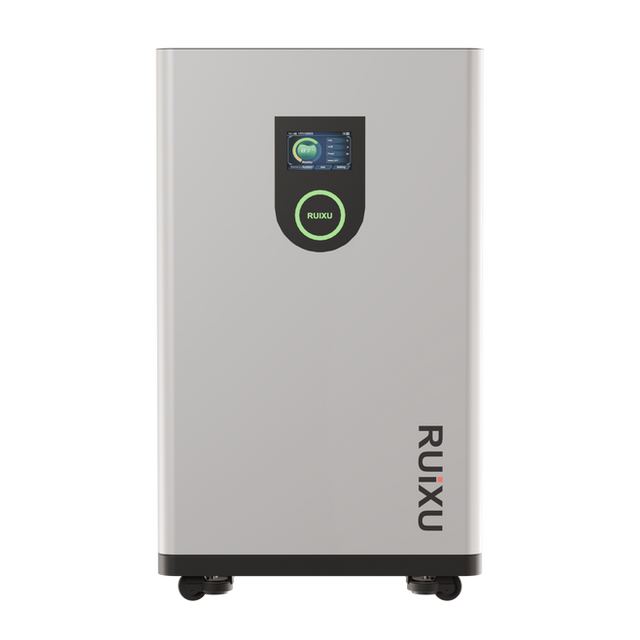
- 16 to 257 kWh
- Add modules later
- 10-year warranty
The Lithi2-16 is Ruixu’s only home battery in Australia: one large floor-standing unit that runs behind another maker’s hybrid inverter. It suits households that truly need that much storage in one enclosure and will read the warranty document before they sign.
By Kieron Taylor, Founder, Solar Select · Updated · 6 min read
The verdict
Plenty of storage in a single, well-thought-out enclosure, with cold-weather and fire-safety features more often seen further up the market. The warranty promises freedom from defects and makes no commitment on retained capacity, and that difference should be weighed before the hardware is.
Best for: Households whose consumption justifies 16 kWh, awkward sites where a wheeled unit solves a real access problem, and cold-climate locations.
Look elsewhere if: You want a warranty that names the capacity you will have when it ends, a smaller battery, or battery and inverter from a single manufacturer.
The inverter pairing, delivery and anchoring of a heavy unit, and whether one large battery is the right size move a Ruixu quote most. Each is covered under “What shapes a Lithi2-16 quote”.
The 30-second take
- One product, one size. The Lithi2-16 is listed at 16 kWh usable, and the Australian range has nothing smaller.
- Battery only. Ruixu makes no inverter, so the unit runs behind a third-party hybrid inverter your installer selects and stands behind.
- Built to be moved and serviced. A touchscreen, a service port, an aerosol fire module, hidden wheels and a wall anchor against tipping.
- Defects cover, not capacity cover. The warranty runs 10 years against faults in materials and workmanship, and it is not a capacity-retention promise.
- Newer to Australia. Supply comes via a Queensland importer with no local manufacturer office, which puts more weight on the installer and importer you deal with.
Ruixu at a glance
Each row is read from the source beside it, on the date it carries. Anything the manufacturer has not published is left out rather than guessed.
| Current models | Lithi2-16 (16 kWh usable) cer.gov.au |
|---|---|
| Usable capacity | 16 to 257 kWh solarproof.com.au |
| Add capacity later | Yes, modules can be added after install solarproof.com.au |
| Warranty | 10 years solarproof.com.au |
| CEC approved list | Yes, listed cer.gov.au |
One large unit where most brands build a stack
Most home batteries reach a useful size by stacking several modules. Ruixu does it in one: the Lithi2-16 is a floor-standing unit entered at 16 kWh usable in the Clean Energy Regulator’s approved-battery register, and it is the whole of the brand’s Australian home range. There is no entry model beneath it. To find out who fits it locally, you can see vetted Ruixu battery installers by state.
On the datasheet, paralleled units stretch the range from 16 kWh to 257 kWh, a span that covers commercial buildings as well as homes. For a household the relevant figure is the first one. If your evening and overnight use does not come close to it, a big battery that only ever part-cycles is capacity paid for and never drawn on.
So the first question on a Ruixu quote is about your house, not the battery. Have a more modest battery from a different brand modelled next to it, using your own consumption data, and see whether the extra storage earns its place.
Wheels, a touchscreen and a fire module: the hardware details
A single enclosure holding this much storage is heavy, and Ruixu has designed around that fact. Concealed heavy-duty wheels let installers roll it along the side of the house and into its spot with no lifting gear, after which a bracket anchors it to the wall so it cannot tip. The same wheels make it easier to pull clear later for maintenance.
Serviceability continues on the front. A touchscreen displays the battery’s status and lets settings be changed at the unit as well as through an app, and an inspection port reaches the fuse and the battery management electronics. An electro-coated casing resists rust outdoors, and an aerosol fire module sits inside.
There is also a self-heating function. Lithium cells slow their charging when they get cold; the Lithi2-16 draws some power to warm its own pack so charging continues. On the tablelands and in alpine areas that answers a real winter limitation. On the coast it will seldom switch on, and it should not decide the purchase there.
Read the warranty as a defects promise, because that is what it is
The Ruixu limited warranty runs for 10 years and promises a product free of defects in materials and workmanship. What it leaves out is the clause most competitors lead with: a percentage of original capacity the battery should still hold when the term ends. Nor does it give a state-of-health threshold or an energy-throughput allowance.
It also reserves the manufacturer’s right to decline a claim if inspection finds the battery has simply worn out in the ordinary way, even while the warranty period is still running. Put those two points together and slow capacity fade is not clearly something an owner can claim for. That is a different kind of promise from a capacity guarantee, and it deserves a side-by-side comparison with the warranty of any other brand you are considering.
The exclusions matter too, because several describe ordinary workmanship: terminals left loose, cabling that is too small, incorrect parallel wiring, too little clearance for airflow, and communication cabling that departs from the manufacturer’s guidance.
- Ask for the warranty document itself, and ask the installer to put in writing what happens if capacity fades.
- Ask who the Australian importer is and how a claim would be handled several years in.
- Ask how the data cable between battery and inverter will be run, since that link is named in the exclusions.
“A defects warranty tells you the battery will not be faulty. It does not tell you how much battery you will have left.”
A battery without its own inverter
Ruixu supplies the battery only. It needs a hybrid inverter made by a different company, that inverter carries its own separate warranty, and no compatibility list appears in either the datasheet or the warranty. Choosing the pairing falls to your installer, who also has to stand behind it.
Grid connection approval covers inverter and battery together. An installer running this combination for the first time can leave the battery charging sluggishly or the monitoring showing figures that make no sense. Ruixu is a recent arrival on the approved-product register, brought in by a Queensland importer; few units are installed here yet and the manufacturer has no Australian office, so an installer’s direct experience with the unit counts for a great deal.
When you line up Ruixu quotes from up to 3 vetted installers, ask each which inverter model they propose, whether that precise pair is one they have set up before, and what their plan is if battery and inverter refuse to talk.
What shapes a Lithi2-16 quote
The battery is a single line item. Most of the variation between quotes comes from what surrounds it.
- The hybrid inverter. Which one is proposed, and whether a suitable one is already on your wall.
- Whether one unit is the right size. There is no smaller step, so sizing is a yes-or-no decision.
- Getting it into place. Access, the floor it will stand on, and the route the wheels have to travel.
- The wall anchor. A heavy floor-standing unit needs its anti-tipping mount fitted, so check it is itemised.
- The rebate calculation. The federal program pays its full rate on the first 14 kWh of usable capacity and tapers above that, so a 16 kWh unit crosses the boundary on its own. Ask to see how the discount was worked out for this capacity.
Rebate eligibility attaches to the model, not the brand. Have the installer show you the Lithi2-16 on the current approved battery list published by the Clean Energy Council on the day you sign, alongside the written warranty position described above.
Is the Lithi2-16 a fit for your house?
- Big-consumption households that want their storage in one enclosure instead of a stack.
- Awkward sites, where rolling a unit into place solves a real access problem.
- Cold postcodes, where self-heating keeps the battery charging through winter mornings.
- Buyers who have already picked a hybrid inverter deliberately and want a battery to sit behind it.
- Probably not anyone who wants a stated capacity floor in the warranty, a modest battery, or a brand with a long Australian service history.
The installer carries more of the outcome here than usual. The Clean Energy Regulator inspected 1,278 home battery installations between July 2025 and April 2026 and found more than 60% substandard, and the Ruixu warranty places routine workmanship errors among its exclusions. Solar Select matches you with up to 3 vetted installers, free; request Ruixu battery quotes in your area and have each one walk you through the warranty before the total.
How long would a Ruixu take to pay for itself at your place?
Postcode, your bill, and whether the roof already has panels. About a minute, and the ten-year figure is yours before anyone asks for a phone number. Start with vetted Ruixu installers in your state.
Read next
Sources
Every quantitative claim on this page traces to one of the sources below — government, manufacturer, or independent AU industry reference. Last verified 2026-09-17.
We use AI to help research and draft. Claims are traced to the sources below and dated. Where we haven’t got a source, we say so on the page — treat that as a starting point and do your own research.
General information only. It doesn’t take your circumstances into account and isn’t legal, financial, insurance or electrical advice. Rebates, tariffs, network rules and product terms change — confirm anything you plan to rely on with your installer, insurer, retailer or distributor, and see our terms.
- cleanenergycouncil.org.au — approved battery list
- dcceew.gov.au — Cheaper Home Batteries Program
- uts.edu.au — CER battery inspection findings, April 2026
- RUiXU — Lithi2-16 technical datasheet (Australian listing)
- RUiXU — limited warranty document (Australian listing)
- SolarQuotes — Ruixu: new kid on the Australian home battery block
- SolarQuotes — Ruixu battery review
- Clean Energy Regulator — CEC approved solar batteries register
Postcode in, up to 3 vetted installers out. Free for homeowners, no obligation. All solar guides · Federal rebates · How it works
Filed under: Brand deep-dives