Brand deep-dives
SMA battery review: Home Storage
SMA Home Storage: one module, neatly integrated, and a deadline on adding more.
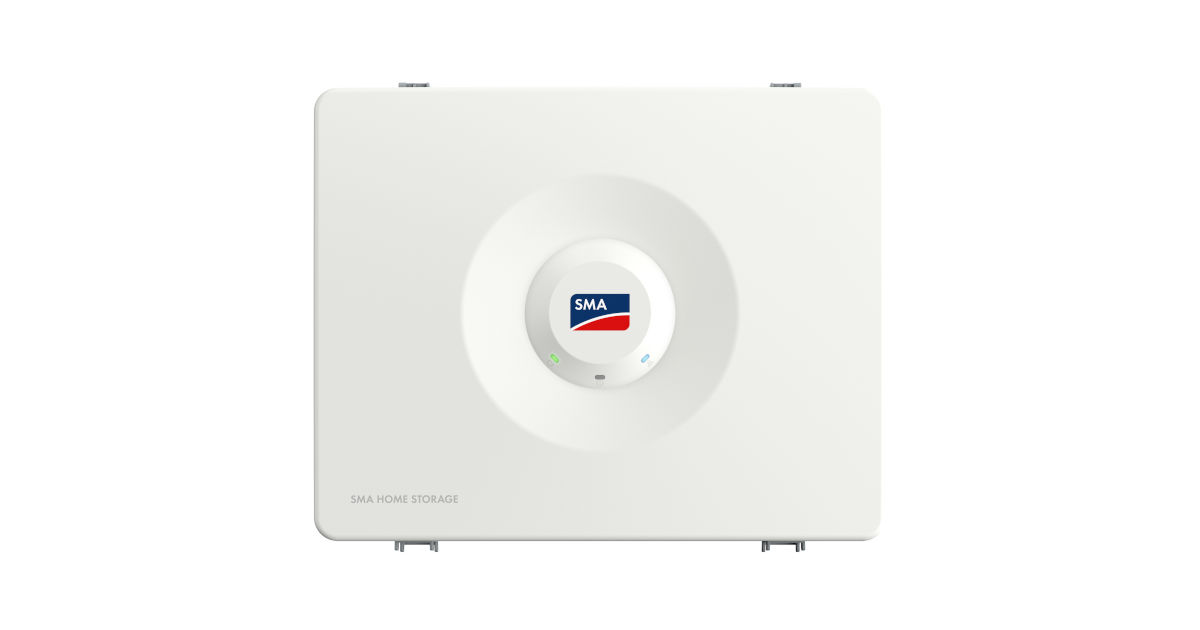
- 3.28 to 16.4 kWh
- Add modules later
- 10-year warranty
SMA Home Storage is a DC-coupled battery made of one 3.28 kWh module repeated up to five times, and it runs only on SMA’s own hybrid inverters. It is the natural companion for a household already choosing an SMA inverter system. The capacity you settle on early is, for practical purposes, the capacity you keep.
By Kieron Taylor, Founder, Solar Select · Updated · 6 min read
The verdict
A tidy, self-commissioning battery that makes most sense as part of an SMA inverter system. Its ceiling is modest, its expansion period closes, and much of its warranty rests on a registration step, so the decisions that matter are all made up front.
Best for: Households already choosing an SMA hybrid inverter, three-phase homes that can use the deepest stack, and buyers who know their final capacity now.
Look elsewhere if: You want a large battery, plan to add capacity years from now, want to keep a non-SMA inverter, or weigh the end-of-warranty capacity figure heavily.
The hybrid inverter model, the module count and whether the full-home backup box is included move an SMA quote more than the battery does. The quote section below takes them one at a time.
The 30-second take
- One module, stacked. Each SMA Home Storage module holds 3.28 kWh of usable capacity, and SMA’s Australian page lists stacks from two modules (6.56 kWh) to five (16.4 kWh).
- SMA inverters only. The battery is DC-coupled to a Sunny Boy Smart Energy or Sunny Tripower Smart Energy hybrid, so on a retrofit the existing inverter is replaced.
- Expansion has an expiry. SMA allows extra modules only within a limited period after the first installation, and separate stacks cannot be run in parallel.
- Registration carries the warranty. The 10-year total depends on the system being registered with SMA soon after commissioning, and the end-of-term capacity commitment is 60%.
- Rebate maths starts at two modules. One module sits under the federal program’s 5 kWh minimum, so a qualifying SMA system has at least two.
SMA at a glance
Each row is read from the source beside it, on the date it carries. Anything the manufacturer has not published is left out rather than guessed.
| Current models | SMA Home Storage HS-BM-3.28-10 module (3.28 kWh usable), Two-module stack (6.56 kWh usable), Three-module stack (9.84 kWh usable), Four-module stack (13.12 kWh usable), Five-module stack (16.4 kWh usable) sma-australia.com.au |
|---|---|
| Usable capacity | 3.28 to 16.4 kWh sma-australia.com.au |
| How it connects | DC-coupled: the battery replaces or includes the inverter sma-australia.com.au |
| Add capacity later | Yes, modules can be added after install sma-australia.com.au |
| Inverter pairing | Own ecosystem only sma-australia.com.au |
| Warranty | 10 years sma-australia.com.au |
| Capacity at end of warranty | 60% guaranteed sma-australia.com.au |
| CEC approved list | Yes, listed cer.gov.au |
One module, repeated: how the range is put together
SMA is a German inverter manufacturer with decades of solar engineering behind it, and the Sunny Boy is among the best-known products in the industry. Home Storage is its answer to the battery question, and it is deliberately narrow. There is one module. It holds 3.28 kWh of usable capacity, and the whole range is that module stacked: 6.56 kWh with two, 9.84 kWh with three, 13.12 kWh with four and 16.4 kWh with five.
The battery is DC-coupled and works only with SMA’s own hybrid inverters, the single-phase Sunny Boy Smart Energy and the three-phase Sunny Tripower Smart Energy. Choosing it is really choosing an SMA inverter system and taking the matching battery along. On a new solar-and-battery install that is simply the system being specified. On a retrofit it means the current inverter comes out, and the quote should show that as a clear line.
The installation itself is one of the product’s strengths. The enclosure is rated for outdoor mounting, the stack goes together with preassembled cables, and commissioning is automatic alongside the inverter. There is less to get wrong on the day than with a hand-wired alternative. To see who fits it locally, you can find vetted SMA installers in your state.
The ceiling is set early, and it stays set
Most stackable batteries are sold with the comfort that more can be added whenever you like. SMA works differently, in two ways that compound.
First, SMA permits additional modules to be integrated into an existing system only within a limited period after the original installation. Once that period has passed, the stack you have is the stack you keep. “We can add more later” is therefore a dated deadline, and it is worth having the installer write the date on your paperwork.
Second, separate storage systems cannot be connected in parallel, so a second stack beside the first is not an option. The inverter becomes the permanent limit. That matters because the two hybrids accept different stack depths: a voltage limit on the battery string means the single-phase Sunny Boy Smart Energy takes a shallower stack than the three-phase Sunny Tripower Smart Energy. A single-phase home cannot reach the 16.4 kWh top of the range at all.
Put together, the advice is to size for where your household will be when the expansion period ends, not for today. If an electric vehicle or a bigger evening load is on the horizon, decide now.
“On this battery “we can always add more later” comes with a closing date, and no second stack to fall back on.”
Registration is where most of the warranty lives
SMA’s Australian product page describes a 10-year warranty in total, but only a short factory term applies automatically. The remainder is added when the system is registered in SMA’s online service centre within a set period after commissioning. Miss that step and the cover shrinks to the short factory term, with nothing on the wall to tell you it happened.
The task takes minutes. Ask the installer to complete the registration before they leave and to send you the confirmation, and ask for that promise in writing at quote stage.
The capacity commitment deserves a look as well. SMA undertakes that the battery will retain at least 60% of its usable capacity at end of life under the warranty terms, a lower floor than much of the market offers. If that number carries weight for you, compare it directly with the alternatives on your shortlist.
What shapes an SMA quote
With a single module type, the differences between two SMA quotes come from everything around the battery. When you compare up to 3 SMA quotes, check these lines.
- Which hybrid inverter. Single-phase or three-phase fixes the stack depth you can ever reach.
- Module count. Every step up is the same 3.28 kWh module, so capacity moves in fixed increments.
- The rebate band. The federal program covers systems from 5 kWh to 100 kWh of usable capacity, so eligibility starts at two modules. It pays its full rate on the first 14 kWh and tapers above that, a line the five-module three-phase stack crosses and the single-phase stack does not.
- Backup hardware. The battery has an integrated black-start function, but full-home backup relies on an additional external box. Check that it is itemised, with the backed-up circuits listed by name.
- Inverter removal on a retrofit. A non-SMA inverter has to go, and that belongs on the quote.
Rebate eligibility is decided model by model. The Home Storage module is on the approved register today; still, ask the installer to show you the exact quoted model on the current Clean Energy Council approved list before you sign.
Software, tariffs and the local track record
Monitoring sits in SMA’s own portal and app, the platform that has looked after its inverters for years. The system is also designed for dynamic tariffs and virtual power plant participation, so a household on a modern retail plan has something useful to configure.
SMA came to home batteries later than most of its competitors, and the installed base of Home Storage in Australia is still small. SolarQuotes rates SMA well on a very small sample of reviews while noting how late the company was to home batteries. In practice, plenty of installers know SMA inverters thoroughly and have handed over few of its batteries. Grid connection covers the inverter and battery as one submission, and an installer new to the storage side can leave it commissioned but poorly set up against your tariff. Ask how many Home Storage systems they have commissioned, as distinct from SMA inverters.
Who should shortlist SMA
- Households already set on an SMA hybrid inverter who want the matching battery instead of a third-party pairing.
- Three-phase homes, which can reach the deepest stack.
- Buyers who value a long-established manufacturer and hardware that largely commissions itself.
- People who know their final capacity now and will not need to revisit it once the expansion period has closed.
- Probably not anyone chasing the largest possible battery, anyone keeping a non-SMA inverter, or anyone who expects to add capacity several years from now.
On this product the installer holds three things you cannot easily check afterwards: the registration, the expansion date and the tariff configuration. That is on top of ordinary workmanship, where the Clean Energy Regulator inspected 1,278 home battery installations between July 2025 and April 2026 and classified more than 60% as substandard. Solar Select can introduce you to up to 3 vetted installers who work with SMA; ask each to confirm all three in writing.
How long would a SMA take to pay for itself at your place?
Postcode, your bill, and whether the roof already has panels. About a minute, and the ten-year figure is yours before anyone asks for a phone number. Start with vetted SMA installers in your state.
Read next
Sources
Every quantitative claim on this page traces to one of the sources below — government, manufacturer, or independent AU industry reference. Last verified 2026-09-17.
We use AI to help research and draft. Claims are traced to the sources below and dated. Where we haven’t got a source, we say so on the page — treat that as a starting point and do your own research.
General information only. It doesn’t take your circumstances into account and isn’t legal, financial, insurance or electrical advice. Rebates, tariffs, network rules and product terms change — confirm anything you plan to rely on with your installer, insurer, retailer or distributor, and see our terms.
- cleanenergycouncil.org.au — approved battery list
- dcceew.gov.au — Cheaper Home Batteries Program
- uts.edu.au — CER battery inspection findings, April 2026
- SMA Australia — SMA Home Storage battery
- SMA Australia — Sunny Boy Smart Energy hybrid inverter
- SMA Australia — services and warranty
- SolarQuotes — SMA battery review
- Clean Energy Regulator — CEC approved solar batteries register
Postcode in, up to 3 vetted installers out. Free for homeowners, no obligation. All solar guides · Federal rebates · How it works
Filed under: Brand deep-dives