Brand deep-dives
SOFAR battery review
PowerAll and BTS, which shape fits a retrofit, and what to pin down before you sign.
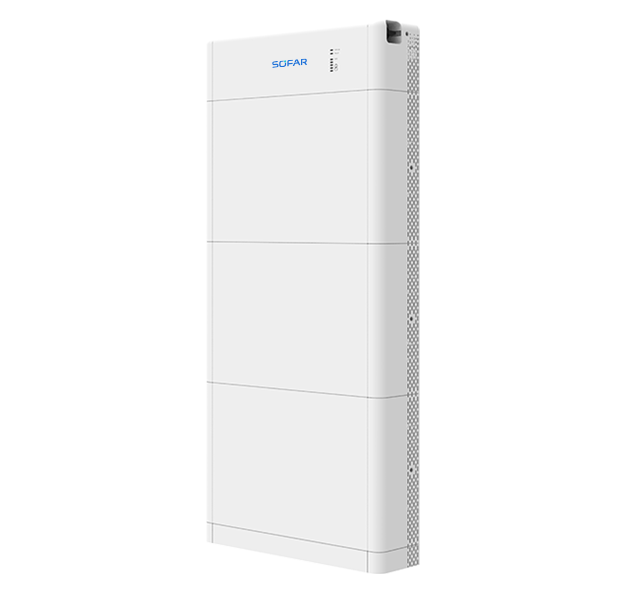
SOFAR sells two quite different products under one name, and a quote saying “SOFAR battery” could mean either. One of them quietly replaces your inverter. Knowing which you are being sold is most of what this review is for.
By Kieron Taylor, Founder, Solar Select · Updated · 6 min read
The verdict
Competitive hardware with a young Australian field record. The decision that matters comes first: PowerAll replaces your inverter, BTS does not, and a quote that just says SOFAR could mean either.
Best for: New systems, or homes whose inverter is due for replacement anyway, where an all-in-one stack is the tidy answer.
Look elsewhere if: Your current inverter is healthy and you want it left alone, or you need years of local service history before you commit.
Whether the quote is PowerAll or BTS changes the number more than anything else. The later sections cover what shifts it.
The 30-second take
- Two ranges, not one. PowerAll is an all-in-one — hybrid inverter and battery in a single wall stack. BTS is battery modules only, paired with a separate SOFAR hybrid inverter.
- The catch that costs retrofit buyers money: an all-in-one takes over the inverter role. Fitting one to solar with a healthy inverter means paying to replace working equipment.
- Both build from modules, so the number that matters is not today’s capacity but the ceiling the quoted configuration accepts.
- Growing fast, installed here recently. The hardware argues well; the Australian field record is younger than the established names, which puts more weight on who fits it.
- We publish no SOFAR price here, deliberately — see below for why, and for what actually moves the number.
PowerAll or BTS? Start here, before anything else
Almost every avoidable problem with a SOFAR quote traces back to this question going unasked. The brand approaches home storage from two directions, and the two produce genuinely different installs, different upgrade paths and different consequences for equipment you already own. You can also find accredited SOFAR installers in your state.
PowerAll is the integrated route: hybrid inverter and battery modules in one wall-mounted stack, growing module by module. One product, one manufacturer, one app, one company answering for all of it. For a new installation that is a real simplification.
BTS is the battery half on its own — high-voltage modules designed to sit alongside a separate SOFAR hybrid inverter. It suits designs where the electrical layout or the property wants the inverter as its own unit.
- PowerAll — all-in-one stack, modules added within the design ceiling, inverter included in the product.
- BTS — modules only, requires a SOFAR hybrid inverter specified alongside it.
- On any quote — the range name should be printed. If it says only “SOFAR”, it is not yet a quote you can compare.
The retrofit trap nobody mentions until the invoice
This is the one thing in this review most likely to save someone real money, so it gets its own section.
If you already have solar and the inverter is working fine, an all-in-one battery is structurally the wrong shape for your house. The inverter is inside the product. Installing it means your existing inverter is replaced, retired, or left doing nothing — and you are paying for a component you already owned and did not need to buy again.
That is not a fault in the product. PowerAll is a good answer to a different question: a new system, or a system where the inverter is near end of life anyway and replacing it is due regardless. The failure is a quoting failure, and it happens when an installer defaults to the shape they fit most often rather than the one your house is in.
If you are retrofitting onto healthy solar, ask specifically what happens to your current inverter under the proposed design, and price the alternative — an AC-coupled battery that leaves it alone — before you accept the answer.
“An all-in-one battery on healthy solar means buying an inverter twice. The product is fine; the fit is not.”
Starting small, and the ceiling you cannot see
Both SOFAR ranges are modular, which makes the buy-now-grow-later plan genuinely available rather than theoretical. Capacity builds by adding modules to the stack.
What limits it is headroom designed in at install. The inverter rating and the stack configuration establish a maximum, and once a system is sitting at that maximum, growth means new hardware rather than another module. This is not disclosed by the capacity figure on the front of the quote. Comparing quotes already? Find accredited SOFAR installers in your state — up to 3, free.
So ask two numbers, not one: what am I getting, and what is the most this exact configuration will ever accept. If there is any prospect of an electric car or a bigger load, say so before the design is signed off rather than after.
Why we are not printing a SOFAR price
Figures for SOFAR exist and we found some. What we could not do was verify them to our own standard — they came from search summaries rather than pages we could open and check, and we would rather publish nothing than publish a number we cannot stand behind.
The deeper reason applies to every brand on this site. Installed prices in Australia move constantly, and the federal battery rebate steps down on a schedule, so any figure is describing a market that has already moved by the time you read it. The things that shift your quote, on the other hand, are stable — so those are what we publish.
“We would rather hand you the questions than a number that has already expired.”
What actually moves a SOFAR quote
- PowerAll or BTS. Different products, different installs, different fates for your existing inverter.
- Module count now, against the ceiling of the quoted stack. Two numbers, and only one of them is usually on the page.
- On BTS, which hybrid inverter is included — and whether the price assumes one is already on your wall.
- Whether backup is wired at all, and which circuits it covers when it is.
- Switchboard condition. Older boards may need work first. An excluded upgrade is a deferred cost, not a saving.
- Rebate treatment. The federal rebate arrives as an upfront discount, so confirm which side of it a quote is written on before comparing totals.
- Installer familiarity. On a younger brand this is a pricing factor as well as a quality one — practised installers quote it more accurately.
How SOFAR stacks up against the names you know
On hardware, competitively. It uses the same lithium iron phosphate chemistry as most of the market, sizes finely, and offers a full-featured all-in-one that several better-known brands do not. It has been among the faster-growing storage names on Australian registry data.
What the long-established brands have that SOFAR does not yet is time — more Australian installs, more installers who have serviced one in year five, more accumulated evidence about how the hardware ages in this climate. That gap is real and it is not closed by a spec sheet.
Which matters more depends on what you are optimising. If cost per usable kilowatt-hour is the priority, SOFAR makes a decent case. If a long local field record is what lets you sleep, it does not yet, and that is a fair reason to look elsewhere.
Either way the installer question carries more weight here than on a household name. Ask how many SOFAR systems they have commissioned, and who handles a manufacturer claim in year four. From here, get up to 3 SOFAR quotes from vetted installers in your state — free, and nobody else sees your details.
How long would a SOFAR take to pay for itself at your place?
Postcode, your bill, and whether the roof already has panels. About a minute, and the ten-year figure is yours before anyone asks for a phone number. Start with vetted SOFAR installers in your state.
Read next
Sources
Every quantitative claim on this page traces to one of the sources below — government, manufacturer, or independent AU industry reference. Last verified 2026-08-23.
We use AI to help research and draft. Claims are traced to the sources below and dated. Where we haven’t got a source, we say so on the page — treat that as a starting point and do your own research.
General information only. It doesn’t take your circumstances into account and isn’t legal, financial, insurance or electrical advice. Rebates, tariffs, network rules and product terms change — confirm anything you plan to rely on with your installer, insurer, retailer or distributor, and see our terms.
Postcode in, up to 3 vetted installers out. Free for homeowners, no obligation. All solar guides · Federal rebates · How it works
Filed under: Brand deep-dives