Brand deep-dives
Sungrow battery review
Sungrow SBR and SBH review: the natural pair for a Sungrow inverter, and where that pairing catches retrofit buyers.
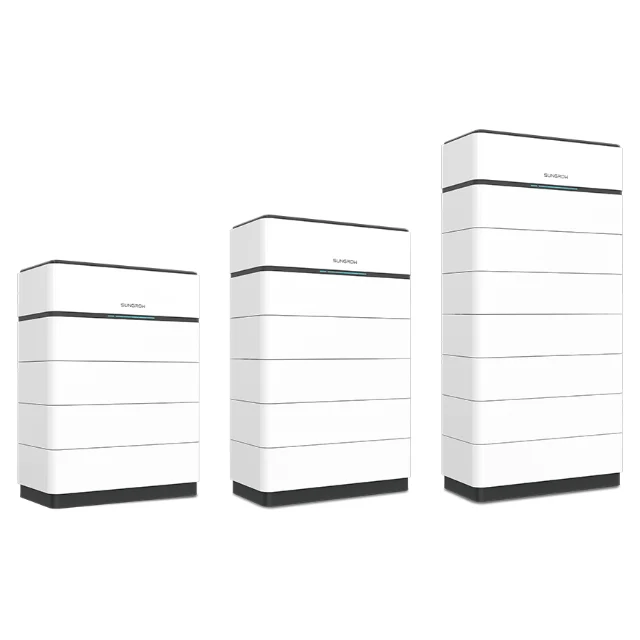
Sungrow is the battery most other batteries get priced against. That makes it the default recommendation from a lot of installers — and it means the one thing that most often makes a Sungrow quote wrong is hidden in the inverter line, not the battery line.
By Kieron Taylor, Founder, Solar Select · Updated · 6 min read
The verdict
The sensible default when inverter and battery are bought together: strong cost per kWh and deep Australian support. It stops being good value the moment it means replacing an inverter you already own.
Best for: Three-phase homes, larger stacks where cost per kWh decides it, and new systems specified as Sungrow from the inverter down.
Look elsewhere if: You are retrofitting onto another brand of inverter, you want one all-in-one box, or you want to keep the option of changing inverter brand later.
The indicative installed ranges, with their basis and the date each source was checked, are in the cost section further down this page.
The 30-second take
- Two families, not one product. SBR is the volume seller for typical homes; SBH uses larger modules with more continuous power for bigger and three-phase homes. They are quoted interchangeably far too often.
- The catch that costs people money: both are DC-coupled and pair *only* with Sungrow SH-series hybrid inverters. Not Sungrow’s own SG string inverters. Not another brand.
- Indicative installed cost runs roughly $8,000–$13,500 at 9.6 kWh and $13,500–$18,000 at 16 kWh. Indicative installed price before the federal battery rebate — it varies by installer, site and configuration. Each figure carries the date its source was reviewed.
- Best for: three-phase homes, larger stacks where cost per kWh dominates, and anyone buying inverter and battery together as one new system.
- Look elsewhere if you are retrofitting onto a non-Sungrow inverter — replacing it usually erases the price advantage that brought you here.
Is Sungrow actually good, or just everywhere?
Both, and the distinction matters when you are reading a quote. Sungrow sits consistently among the top two brands by Australian home-battery market share and finished on the podium in the 2026 installer vote. Installers who once treated it as the budget option now mostly treat it as a solid mid-range one — which is a genuine reputational shift, not marketing. You can also see the Sungrow installers we match, state by state.
What you are buying is depth rather than novelty. Parts are easy to source, and whoever fits it is very unlikely to be fitting their first. On a device that has to be serviceable in year seven, that is worth more than a spec sheet win.
“Ubiquity is a feature on a fifteen-year purchase. The brand nobody has installed before is the brand nobody can fix quickly.”
SBR or SBH — which one is in your quote?
SBR is built from smaller stackable modules and suits typical single-phase homes. SBH uses larger modules, delivers more continuous power, and can run parallel stacks — it is the one that makes sense for bigger homes and three-phase supply.
Continuous power is the part buyers skip. Capacity decides how long you can run; continuous power decides what you can run at once. A stack sized for the first number and not the second is how people end up with a battery that cannot start the air conditioner it was bought for.
- SBR — smaller modules, single-phase homes, the volume seller.
- SBH — larger modules, higher continuous power, parallel stacks, three-phase capable.
- SH-series hybrid inverter — mandatory with either. This is the line to check first.
What a Sungrow system costs installed
A 9.6 kWh Sungrow system typically lands around $8,000–$13,500 installed before the federal battery rebate; a 16 kWh system around $13,500–$18,000. Solar Choice’s installer network puts Sungrow at about $1,110 per usable kWh installed before any rebates, reviewed September 2026. Indicative installed price before the federal battery rebate — it varies by installer, site and configuration. Each figure carries the date its source was reviewed.
That spread is wide for a reason. The single biggest reason two Sungrow quotes for the "same" battery differ by thousands is whether an SH hybrid inverter is inside the price or assumed to be already on your wall. Everything else — module count, single versus three phase, the switchboard work backup needs, and where the unit is mounted — moves the number after that.
If you are replacing a working non-Sungrow inverter to make a Sungrow battery fit, price the inverter into the comparison. Done properly, that comparison quite often ends with a different brand.
How Sungrow’s sizes land against the rebate step
The federal Cheaper Home Batteries rebate pays in full on the first 14 kWh of usable capacity, then tapers hard above it. That step is invisible on a spec sheet and very visible on a quote, and every brand meets it differently depending on the size of the blocks it stacks in. Want that checked against real quotes? Accredited Sungrow installers, state by state.
For Sungrow the practical consequence is that mid-size SBR stacks sit close to the full-rate band, while the larger SBH configurations spend a meaningful share of their capacity in the tapered tiers. That is not a reason to buy small — it is a reason to know which side of the step each extra module falls on before you agree to it.
- At 12.8 kWh the rebate is about $3,482 — essentially all of it at the full rate.
- At 14 kWh it is about $3,808 for an eligible install — the most any system can earn at the full rate.
- At 20 kWh it is about $4,787. The extra 6 kWh past the step earned roughly 60 cents in the dollar of what the first 14 earned.
- At 30 kWh it is about $6,174 — more capacity, and a lower rebate per kWh again.
None of that makes a big stack wrong. It makes the marginal kWh cheaper in rebate terms than the first one, which is a thing to decide deliberately rather than discover afterwards.
Where Sungrow wins, and where it loses
Against Sigenergy’s SigenStor — the brand it is most often cross-shopped with — Sungrow wins on cost per kWh, on a longer Australian track record, and on that dense installer base making parts and service easy to come by.
It loses on integration. You are buying a battery plus a separate inverter rather than one stack, there is no built-in EV charging path, and site conditions matter more than usual: the performance warranty carries placement requirements, so a shaded, ventilated mounting position is a condition rather than a nicety. In consistently hot locations, read those conditions with your installer before you commit.
Living with one
- Monitoring is functional rather than delightful. It does the job; most owners check it occasionally rather than daily.
- Virtual power plant participation is supported across several Australian programs, though the list is shorter than Tesla’s — check your intended retailer specifically rather than assuming.
- Because the battery only works with Sungrow hybrids, changing inverter brand later means changing the battery too. Price that flexibility cost in now, while you still have the choice.
- Mixed-age or mismatched modules have been linked to imbalance issues, so expanding a stack years later is a conversation to have with your installer, not a given.
Who should buy one, and who should not
- Buy if you want strong cost per kWh from a brand with real Australian support depth.
- Buy if you have three-phase supply — an SH-T inverter with an SBH stack gives genuine three-phase capability.
- Buy if you are purchasing inverter and battery together as one new system.
- Look elsewhere if you are retrofitting onto an existing non-Sungrow inverter.
- Look elsewhere if you want the freedom to change inverter brand later, or you want a single all-in-one box.
Ask these four before you sign
- Does this quote include a Sungrow SH hybrid inverter, or does it assume I already have one?
- Is this SBR or SBH, how many modules, and what continuous power does that give me?
- Where exactly will it be mounted, and does that placement satisfy the warranty conditions?
- Who supports this if it fails in year four — you, or a distributor?
An installer who answers all four without hedging is telling you more about your likely outcome than any brochure will. Next step: accredited Sungrow installers in your state, up to 3 quotes and no obligation.
How long would a Sungrow take to pay for itself at your place?
Postcode, your bill, and whether the roof already has panels. About a minute, and the ten-year figure is yours before anyone asks for a phone number. Start with vetted Sungrow installers in your state.
Read next
Sources
Every quantitative claim on this page traces to one of the sources below — government, manufacturer, or independent AU industry reference. Last verified 2026-08-21.
We use AI to help research and draft. Claims are traced to the sources below and dated. Where we haven’t got a source, we say so on the page — treat that as a starting point and do your own research.
General information only. It doesn’t take your circumstances into account and isn’t legal, financial, insurance or electrical advice. Rebates, tariffs, network rules and product terms change — confirm anything you plan to rely on with your installer, insurer, retailer or distributor, and see our terms.
Postcode in, up to 3 vetted installers out. Free for homeowners, no obligation. All solar guides · Federal rebates · How it works
Filed under: Brand deep-dives