Brand deep-dives
Neovolt battery review
Neovolt: a blackout switchover appliances barely notice, and an inverter that must be sized to the roof.
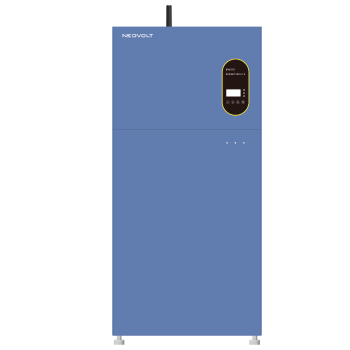
- 4.6 to 9.6 kWh
- Add modules later
- 10-year warranty
Neovolt is the residential brand of Bytewatt, a power-electronics company with a background in uninterruptible power supplies. Its core product is a single-phase all-in-one that matches Bytewatt’s own hybrid or battery inverter to a wall-mounted battery, with a stackable three-phase system above it. It suits price-led buyers who care about backup, and households adding storage beside solar they already own.
By Kieron Taylor, Founder, Solar Select · Updated · 6 min read
The verdict
A value all-in-one whose backup behaviour is its standout feature and whose owner reviews are strong. The result depends on the inverter being sized to the solar array, and on an installer who configures and tests the backup mode.
Best for: Households that want seamless blackout cover, owners adding storage beside an existing solar inverter, and price-led buyers who prefer a matched all-in-one.
Look elsewhere if: A big local service organisation and many years of Australian history matter more to you than backup performance, or you want a battery that pairs with another brand’s hybrid inverter.
Which inverter version is quoted, single-phase or three-phase, and how much of the house goes on the backup output move a Neovolt quote more than the battery itself. The quote-factors section sets out each.
The 30-second take
- UPS heritage, and it shows. Owners single out the blackout changeover as quick enough that most appliances carry on regardless.
- Hybrid or battery-inverter. The hybrid version handles new solar. The battery-inverter version connects beside a solar inverter you already have and leaves it alone.
- Grid-forming backup. Set up properly, it keeps an existing solar inverter producing through an outage, but it has to be configured and tested.
- Listed range and warranty. Clean Energy Council listed BW-BAT modules span 4.6 kWh to 9.6 kWh usable, with a 10-year warranty and 70% of usable capacity retained.
- Know the claim chain. Warranty claims start with the installer and run through Bytewatt’s Australian contact and an importer, so get the route in writing.
Neovolt at a glance
Each row is read from the source beside it, on the date it carries. Anything the manufacturer has not published is left out rather than guessed.
| Current models | BW-BAT-4.8S (4.6 kWh usable), BW-BAT-10.1P (9.6 kWh usable) cer.gov.au |
|---|---|
| Usable capacity | 4.6 to 9.6 kWh cer.gov.au |
| How it connects | Hybrid: works either way neovoltess.au |
| Add capacity later | Yes, modules can be added after install neovoltess.au |
| Inverter pairing | Own ecosystem only neovoltess.au |
| Warranty | 10 years neovoltess.au |
| Capacity at end of warranty | 70% guaranteed neovoltess.au |
| CEC approved list | Yes, listed cleanenergycouncil.org.au |
| Who can install it | Any CEC-accredited installer neovoltess.au |
What Neovolt actually is
Neovolt is Bytewatt’s home-storage brand. SolarQuotes describes Bytewatt as a company that built uninterruptible power supplies for years before turning to inverters, and the product reflects it: the design priority is keeping power steady when the grid drops.
The core system is single-phase and comes as a matched pair, a Bytewatt inverter and a wall-mounted battery. You choose between two inverter types. The hybrid version takes new solar panels directly. The battery-inverter version connects beside a solar inverter you already own and leaves it where it is, which makes Neovolt a more comfortable retrofit than most all-in-ones.
Above that sits a three-phase system using high-voltage battery modules that stack, and several inverters can be paralleled around a shared battery bank for bigger properties. On the Clean Energy Council list the BW-BAT-4.8S gives 4.6 kWh usable and the BW-BAT-10.1P 9.6 kWh; the BW-BAT-9.6P listings were suspended in September 2026. The single-phase system is one fixed battery size, so a household that expects its storage needs to grow should begin on the three-phase side. To have that mapped to your own home, find vetted Neovolt installers in your state.
The backup behaviour, and the setup it depends on
Blackout performance is the reason most people look at Neovolt. Owners on SolarQuotes consistently describe a changeover fast enough that the majority of appliances never register the outage, and on single-phase systems the solar keeps charging the battery while the grid is down.
The grid-forming mode is what makes the retrofit case. With it set up, a solar inverter you already own keeps producing during an outage and the battery keeps refilling, instead of the array sitting idle until the grid returns.
None of that is automatic. The mode has to be configured and then tested with your actual solar inverter, and backup only reaches the circuits wired to the backup output. Ask for those circuits by name, and ask the installer to demonstrate an outage before they leave. Installers who have commissioned the system before will know the routine, and you can get matched with Neovolt installers who cover your area.
Inverter sizing: the mistake behind most unhappy reviews
The thing a buyer would not know to ask concerns the inverter, not the battery. Among the minority of SolarQuotes owners who were disappointed, the recurring story is an inverter too small to refill the battery in the daylight available: a system that copes in summer and falls short in winter. Those complaints are about discharge faults and undersized inverters, not about the cells.
It happens when an installer sizes the inverter to match the battery instead of the solar array. On the hybrid version the new inverter also goes through network approval, so the size chosen at quote stage is the size you live with.
- Ask whether the inverter is sized to your array or only to the battery, and ask to see the reasoning.
- Ask how the system refills on a short winter day, using your own solar output and not a brochure figure.
- Ask which version is quoted, hybrid or battery-inverter, and why it suits your house.
“A battery can only give back what the inverter had time to put in. Size the inverter to the roof, not to the box.”
What changes a Neovolt figure
Neovolt is positioned as a value brand, and the battery is rarely what separates one quote from the next. These are the lines to read.
- Inverter version. Hybrid means new solar runs through Neovolt’s electronics. Battery-inverter keeps your current solar inverter working.
- Phase. Single-phase, or the three-phase system — and on three-phase, how many battery modules the stack starts with.
- Inverter size relative to the array, for the reasons above.
- Backup scope. How many circuits go on the backup output, and whether grid-forming is being set up for existing solar.
- The warranty paperwork. Who is named on it — Bytewatt’s Australian office, the importer, the installer — and how a claim passes between them.
When you compare up to 3 Neovolt quotes from vetted installers, check that all of them specify the same inverter version and size. Two quotes for “a Neovolt” can describe quite different systems.
Warranty, support chain and the approved-list check
Bytewatt’s warranty document for Australia and New Zealand gives 10 years of product cover and a capacity warranty of 70% of usable capacity retained, with conditions on temperature and throughput. The term was lengthened by a published update statement, which is listed in the sources below.
Two conditions deserve attention. The warranty excludes installation by anyone who is not an accredited electrician, and claims go to the installer first. That makes your installer part of the warranty chain, not only the person who fits the unit. Behind them are a Bytewatt contact in Australia and an importer. Neovolt’s Australian support history is short, so ask the installer to write down who processes a claim before you sign.
Monitoring runs through Bytewatt’s cloud platform and app, which reviewers find easy to use. The most common grumble is the system dropping off the platform, which generally traces back to where the Wi-Fi stick was placed and how the home network was set up at commissioning. The battery carries on working, but you lose sight of it. Ask where the stick is going, and have the installer confirm the portal is reporting before they go.
On the rebate, eligibility under the Cheaper Home Batteries Program is decided model by model. The BW-BAT modules are on the Clean Energy Council approved list, and the program also requires the battery to be connected to solar and the installer to hold SAA accreditation. Ask to see the exact quoted model on the current list, and keep that string on your contract.
Who Neovolt suits
- Households where a blackout should pass unnoticed by the appliances on the backed-up circuits.
- Owners of existing solar who want storage added beside their current inverter.
- Price-led buyers who prefer a matched all-in-one to a component build.
- Larger three-phase homes planning to stack high-voltage modules.
- Probably not a buyer who wants the widest choice of installers familiar with the brand, a household on a virtual power plant plan that does not list Bytewatt, or anyone wanting a battery that pairs with another brand’s hybrid inverter.
Installation is where a Neovolt system is won or lost: inverter sizing, grid-forming setup and Wi-Fi placement are all commissioning decisions. Solar Select matches you with up to 3 vetted installers, free. Find Neovolt installers in your state and ask each how many they have commissioned, and how they test the backup before handover.
How long would a Neovolt take to pay for itself at your place?
Postcode, your bill, and whether the roof already has panels. About a minute, and the ten-year figure is yours before anyone asks for a phone number. Start with vetted Neovolt installers in your state.
Read next
Sources
Every quantitative claim on this page traces to one of the sources below — government, manufacturer, or independent AU industry reference. Last verified 2026-09-17.
We use AI to help research and draft. Claims are traced to the sources below and dated. Where we haven’t got a source, we say so on the page — treat that as a starting point and do your own research.
General information only. It doesn’t take your circumstances into account and isn’t legal, financial, insurance or electrical advice. Rebates, tariffs, network rules and product terms change — confirm anything you plan to rely on with your installer, insurer, retailer or distributor, and see our terms.
- cleanenergycouncil.org.au — approved battery list
- dcceew.gov.au — Cheaper Home Batteries Program
- neovoltess.au — Bytewatt warranty document for Australia and New Zealand
- neovoltess.au — Bytewatt warranty update statement
- neovoltess.au — single-phase energy storage system
- neovoltess.au — three-phase energy storage system
- solarquotes.com.au — Bytewatt Neovolt battery reviews
Postcode in, up to 3 vetted installers out. Free for homeowners, no obligation. All solar guides · Federal rebates · How it works
Filed under: Brand deep-dives