Safety & standards
Twice the inspections, same story: about 62% substandard
The Clean Energy Regulator’s battery inspection sample more than doubled by June. The headline rate barely moved — which tells you the April figure was not a small-sample fluke.
· 6 min read · Last verified 2026-08-11
The 30-second take
- As at 8 June 2026, the Clean Energy Regulator had inspected 2,642 battery installations from 1 July 2025 onward.
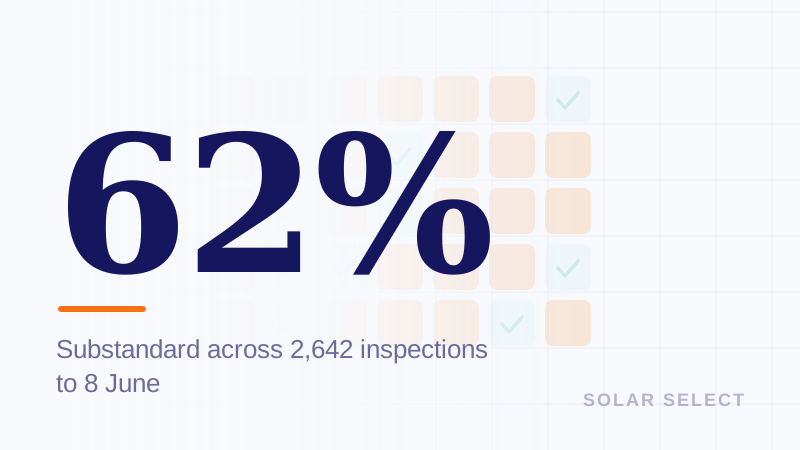
- The results: roughly 62% substandard, about 37% adequate and safe, and 0.83% unsafe — around 22 installations.
- The sample more than doubled from the April figure of 1,278 and the substandard rate barely moved. This is a real pattern, not a small-sample artefact.
- The unsafe rate fell — from 1.2% in April to 0.83% in June — while the substandard rate held.
- The gap between "substandard" and "unsafe" remains the most important and most frequently mangled distinction in this data.
What the updated numbers say
In April 2026, the Clean Energy Regulator’s battery inspection programme had covered 1,278 installations from the first year of the Cheaper Home Batteries Program, and found more than 60% substandard with 1.2% unsafe. That figure got a lot of attention, and it deserved to.
By 8 June 2026 the sample had grown to 2,642 inspections of installs from 1 July 2025 onward. The updated breakdown: roughly 62% substandard, about 37% adequate and safe, and 0.83% — approximately 22 installations — unsafe.
Two things are worth noting. First, doubling the sample did not move the substandard rate, which means the April number was measuring something real rather than an unlucky first batch. Second, the unsafe rate came down.
Why a stable rate across a doubled sample matters
When a striking statistic comes out of a small sample, the reasonable response is to wait for more data. Inspection programmes often start by targeting the installs most likely to have problems, which can inflate early failure rates.
A rate that holds steady as the sample more than doubles is much harder to dismiss. It says that roughly six in ten inspected battery installations from the rebate’s first year did not meet the required standard on at least one checklist item — consistently, across a substantial number of inspections.
That is not a story about one bad quarter or a handful of rogue operators. It is a description of the average quality of work being done in a market where demand outran the accredited workforce.
“The number held when the sample doubled. That is what turns a headline into a finding.”
Substandard is still not the same as dangerous
This needs restating every time these figures are quoted, because the distinction does real work.
The 62% substandard category is overwhelmingly composed of installations that are operating safely but fail one or more checklist items — most commonly labelling, signage and documentation. They require rectification. They do not require panic, and in most cases they do not require the system to be switched off.
The 0.83% unsafe category is the one that matters for immediate safety. Around 22 installations across the whole sample were classified this way. That is a small number in percentage terms and a serious one in absolute terms, and it is the group that gets escalated for urgent attention.
Reporting that collapses these into "62% of batteries are dangerous" is wrong and unhelpful. So is dismissing the substandard majority as mere paperwork — a system with missing shutdown signage is a system an emergency responder cannot safely isolate.
The improving line and the flat line
The unsafe rate falling from 1.2% to 0.83% between April and June is a genuine positive, and there are plausible reasons for it.
The inspection programme itself creates pressure. So does the photographic evidence requirement introduced from 1 March 2026, which forces labelling evidence to be captured on every claim rather than only on the small percentage that get inspected. And the industry has had another few months of experience with a product category that was niche until recently.
The substandard rate holding flat is the less comfortable half. It suggests the systemic causes — compressed job times, crews new to battery work, finishing tasks treated as optional — have not resolved. Those are capacity problems, and capacity problems do not fix themselves while demand keeps growing.
What to do with this if you are buying
The single most useful reframe: this data is not a reason to avoid batteries. It is a reason to treat the choice of installer as the main decision rather than a formality after you have picked a brand.
The hardware in this category is largely commoditised. Reputable batteries from established manufacturers are broadly reliable, and the differences between them matter less than the marketing suggests. What varies enormously — by a factor visible in national inspection data — is who installs it.
- Ask whether the installer is accredited by Solar Accreditation Australia for battery work specifically.
- Agree in writing that the handover pack — commissioning records, documentation, labelling, shutdown signage — is part of what you are buying.
- Ask how long they have been installing this specific battery type, not how long they have been in solar.
- Check the trading history of the business writing your workmanship warranty.
- If you already have a battery and never received documentation, request it now while the installer still exists.
What this means for you
If you’re a homeowner
- The stable 62% figure across a doubled sample means installer quality is the dominant variable in this purchase. Spend your diligence there, not on comparing datasheets.
- Substandard mostly means rectifiable defects, not danger — but missing shutdown signage is a real safety document, not a formality.
- Get the handover pack written into the contract before you sign, not requested afterwards.
- If your own install predates March 2026, it is worth checking your labelling and documentation yourself.
If you’re an installer
- The substandard rate holding flat while the unsafe rate fell suggests process discipline is working on the severe end and not yet on the routine end. The routine end is the cheap one to fix.
- The photographic evidence requirement now applies pressure on every claim rather than the inspected sample. A pre-departure checklist is the lowest-cost way to stay ahead of it.
- Homeowners are quoting these figures back to installers. Being able to discuss them accurately — including the substandard-versus-unsafe distinction — is a trust advantage.
Read next
Sources
Every quantitative claim on this page traces to one of the sources below — government, regulator, market operator, or independent industry reference.
We use AI to help research and draft. Claims are traced to the sources below and dated. Where we haven’t got a source, we say so on the page — treat that as a starting point and do your own research.
Ready to compare quotes? Postcode in, up to 3 vetted installers out. Free for homeowners, no obligation. All solar news · Solar guides · How it works