Brand deep-dives
Sigenergy battery review: SigenStor
What it costs, what it does, and who should fit it.
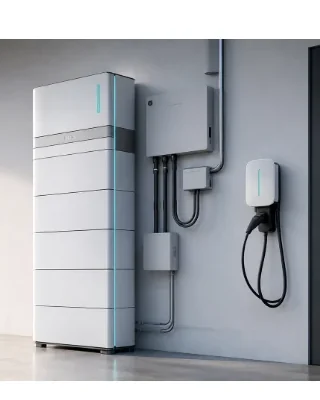
Verdict: the most capable stack sold here. Buy the installer first.
- $14,000 to $18,000 before rebate
- 5 to 48 kWh
- Add modules later
- 10-year warranty
Sigenergy went from a 2022 start-up to the battery Australians ask us about most. This is the plain read on the price, the stack, the blackout behaviour and the recall, with every number traced to its source.
By Kieron Taylor, Founder, Solar Select · Published 11 August 2026 · Updated · 9 min read
The verdict
The most capable package on the Australian market in 2026, and the one with the shortest history behind it. Buy the installer first and the brand second, and the risk becomes manageable.
Best for: Households that want capacity they can grow later, three-phase homes that want the whole house backed up, and anyone who wants EV charging designed into the battery rather than bolted on.
Look elsewhere if: A decade of Australian field data is what you need to feel safe, or you already own a recent hybrid inverter you want to keep. The SigenStor replaces it.
The installed band, its source and the rebate deduction are in the table below. The full working, quote by quote, is in the Sigenergy price guide.
The 30-second take
- Price. $14,000 to $18,000 installed for a 16 kWh SigenStor before the federal battery rebate, from Solar Choice’s installer-network figure of about $1,000 per usable kWh (reviewed August 2026). The rebate takes roughly $4,100 off at that size.
- What you get. One tower that is the solar inverter, the battery, the backup switch and the energy manager, with an optional DC fast charger for an EV. Modules of 5 or 8 kWh stack to 48 kWh.
- The catch. Sigenergy was founded in 2022. The hardware is ahead of most rivals; the Australian field record is four years old, and a ten-year warranty is a bet on the company as much as the product.
- The recall. Single-phase 8, 10 and 12 kW controllers sold between March and November 2025 were recalled over AC plugs that could overheat. About 100 units, a free plug swap, and two extra years of warranty for owners.
- Verdict. If you want capacity you can add to, three-phase backup or EV charging in the same box, this is the one to quote. If a long field record is what lets you sleep, read the Powerwall review too.
Sigenergy at a glance
Each row is read from the source beside it, on the date it carries. Anything the manufacturer has not published is left out rather than guessed.
| Installed price, before the federal rebate | $14,000 to $18,000 for a 16 kWh SigenStor, August 2026 solarchoice.net.au |
|---|---|
| Per usable kWh installed | $1,000 per usable kWh (Solar Choice, August 2026) solarchoice.net.au |
| Federal rebate at 16 kWh | About $4,134 off, on the current schedule. Take it off the price above. dcceew.gov.au |
| Current models | SigenStor EC 8, 10 and 12 kW single-phase energy controllers, SigenStor three-phase energy controllers, 5 to 25 kW, Sigen Battery module, 5 kWh class (5 kWh usable), Sigen Battery module, 8 kWh class (8 kWh usable) solarquotes.com.au |
| Usable capacity | 5 to 48 kWh energymatters.com.au |
| How it connects | DC-coupled: the battery replaces or includes the inverter solarquotes.com.au |
| Add capacity later | Yes, modules can be added after install energymatters.com.au |
| Inverter pairing | Own ecosystem only solarquotes.com.au |
| Warranty | 10 years solarquotes.com.au |
| Capacity at end of warranty | 70% guaranteed solarquotes.com.au |
| CEC approved list | Yes, listed pv-magazine-australia.com |
| Who can install it | Manufacturer-certified installers only sigenergy.com |
How much does a SigenStor cost installed in Australia?
A 16 kWh SigenStor, installed, sits at $14,000 to $18,000 before the federal battery rebate. That band comes from Solar Choice’s installer-network average of about $1,000 per usable kWh installed (reviewed August 2026), corroborated by a July 2026 price guide that put a 16 kWh single-phase system at $14,000 to $17,000 before the rebate.
The rebate is a deduction from that band, not a second price. Sigenergy’s own release describes it as “around 30 per cent of installed cost”; on the current federal schedule the figure at 16 kWh is about $4,100, and it tapers above 14 kWh, so a 32 kWh stack does not attract double. The price guide sets the deduction out at each size.
Two quotes for the same stack can still differ by thousands. The controller size, the module count, whether the gateway and switchboard work are inside the price, and whether the quote is written before or after the rebate all move the number. A quote that does not name the controller model and the module count is not a quote you can compare.
What is a SigenStor, and what do the five parts do?
Sigenergy was founded in 2022 by Xu Yingtong, who spent 23 years at Huawei and ran its solar business before leaving. The company shipped one idea: put the parts of a home energy system that usually arrive as separate boxes into a single tower. The energy controller on top is the hybrid solar inverter. The modules under it are the battery. The gateway beside it is the backup switch. The energy manager runs the lot from the mySigen app, and an optional DC charger module at the base charges an EV from the same stack. The Sigenergy profile walks the line-up model by model.
That integration is the reason it is on so many quotes. One warranty covers the controller and the modules, one app shows every flow, and a module added in year three plugs into the tower you already own instead of a second unit on the wall. The Australian single-phase controllers are approved by the Clean Energy Council, which is what makes the stack eligible for the federal rebate, and the three-phase range is listed too.
How big should you go?
- 5 or 8 kWh
- per battery module
- 6
- modules in one stack
- 48 kWh
- the most one stack holds
A household using 16 to 20 kWh a day lands somewhere between 10 and 16 kWh of storage, which is two or three modules. The federal rebate pays its full rate up to 14 kWh and steps down above it, so the sweet spot for most single-phase homes is a stack of 13 to 16 kWh. Go bigger only if you have an EV, a three-phase house with heavy evening loads, or a plan to leave the grid behind for most of the year.
The point of a modular tower is that this decision is not final. Start with what the rebate rewards, watch a year of data in the app, and add a module if the battery is empty by nine every night. That is the option a sealed unit does not give you, and it is the strongest practical argument for the SigenStor over a fixed-size battery.
SigenStor vs Tesla Powerwall 3: where each one wins
These two are the batteries most Australians shortlist against each other, so the comparison belongs on this page rather than a footnote. The Powerwall is the sealed, polished single unit. The SigenStor is the tower that grows. The rows below are the ones that decide it; the full comparison argues each one at length.
| SigenStor | Tesla Powerwall 3 | |
|---|---|---|
| Usable capacity | 5 to 48 kWh in one stack, in 5 or 8 kWh modules | 13.5 kWh per unit, add whole units |
| Adding capacity later | Add a module to the tower you own | Add a second Powerwall or an expansion unit |
| Three-phase backup | True three-phase controllers exist | Backs up one phase, even with several units |
| Switch to backup | Manufacturer claims 5 milliseconds, with no gap on grid return | Near-instant as well; the differences show at the edges |
| EV charging | Optional 12.5 or 25 kW DC module in the same tower | Separate AC wall connector |
| Weather rating | IP66, outdoor-rated | Outdoor-rated |
| Warranty | 10 years, 70% capacity or a throughput cap | 10 years |
| Installed, before the rebate | $14,000 to $18,000 for 16 kWh (Solar Choice, about $1,000 per usable kWh) | $13,500 to $17,500 for 13.5 kWh (Solar Choice, $1,129 per usable kWh) |
| Australian track record | Since 2022 | The longest of any battery sold here |
Read the last two rows together. The SigenStor is the cheaper battery per kilowatt-hour and the newer name, and both facts come from the same place: a company that priced its way into a market where Tesla had a decade’s head start. Neither is a reason to skip the other. They are the trade you are making.
What happens in a blackout?
When the grid drops, the gateway isolates the house and the stack keeps the backed-up circuits running. Sigenergy claims a 5 millisecond switch to backup and no gap at all when the grid returns, which is fast enough that most electronics never notice. One owner on the Whirlpool forums put it plainly: the only appliance to notice the switch was the oven clock.
What stays on is a design question, not a spec. On a three-phase home a three-phase controller can back up the whole house, which the Powerwall cannot. On a single-phase home the installer designs a set of backed-up circuits: fridge, lights, internet, a few power points. Air conditioning and an oven on the same circuit set will drain a 16 kWh stack in an evening, and a good installer says so before you sign, not after the first outage.
Set the backup reserve in the app before storm season. A battery that runs itself to empty every night has nothing left when the grid fails at eight in the evening.
The November 2025 recall: what happened, and what it means now
- ~100
- controllers affected nationally
- 19 Nov 2025
- recall published
- +2 years
- warranty added for affected owners
The Clean Energy Regulator published a recall on 19 November 2025 covering SigenStor EC 8, 10 and 12 kW single-phase energy controllers sold between 4 March and 18 November 2025. The fault was AC plugs on the controller that could overheat. Around 100 units were affected. Owners had output limited over the air until a free replacement plug was fitted, and Sigenergy added two years to the warranty on affected systems. Battery modules and three-phase controllers were never in scope.
Sigenergy attributed the fault to how the plugs were terminated at install. SolarQuotes, whose reporting is one of the sources on this page, disputed that framing and noted some owners were still waiting on replacements months later. You do not need to settle that argument to act on it: on any single-phase unit installed in that window, ask the installer to show you the replaced plug and the warranty extension in writing.
A recall is not the rare event it sounds like. Tesla recalled certain Powerwall 2 units the same year. The useful question is how fast a fault was found, how clearly it was communicated, and whether the fix reached owners at no cost. On those three counts this one was handled properly, and it left a clear paper trail you can check.
SigenStor pros and cons
- For: capacity you can grow. Modules of 5 or 8 kWh stack to 48 kWh in one tower, so the battery you buy at 13 kWh can be the battery you own at 24.
- For: the best price per kilowatt-hour on the shortlist. About $1,000 per usable kWh installed before the rebate on Solar Choice’s figure, and the gap widens at 16 kWh and above.
- For: real three-phase backup. The three-phase controllers keep the whole house live, which the sealed single-phase rivals cannot.
- For: EV charging built in. A 12.5 or 25 kW DC module in the same stack, with vehicle-to-home in the hardware.
- Against: the company is four years old. The warranty is ten years. The Australian field record is not.
- Against: a closed ecosystem. The SigenStor is the inverter. A healthy hybrid inverter you already own is replaced, not reused.
- Against: young software. Early mySigen releases drew bug reports from Australian owners. Updates are frequent, which is both the fix and the reminder.
- Against: the recall. Handled, but it is on the record, and it is the reason to check the plug on any 2025 single-phase unit.
Is a SigenStor worth it?
Take the band above, deduct the rebate, and divide by what the battery saves in a year. On Solar Select’s estimate model, a battery added to existing panels on a bill of $150 a month or more saves about $1,800 a year at the Sydney reference postcode used for the model, with a 5 kW export limit, which puts payback between about six and eight years against the after-rebate band. On a $100 bill the saving drops to about $1,400 a year and payback stretches to eight years or more.
That is a typical figure, not yours. A big bill and a poor feed-in tariff shorten it; a small bill lengthens it. The estimate below asks for your postcode, your bill and whether the roof already has panels, and shows the ten-year number before anyone asks for a phone number. The install price is the other half of the sum, and vetted Sigenergy installers in your state are the only people who can put a real figure on it.
Who should look at something else?
Anyone who wants the longest possible Australian track record over the newest hardware: the Tesla Powerwall 3 review covers the sealed alternative, and the Sungrow review covers the established pairing for a Sungrow inverter. Anyone with a recent hybrid inverter in good health, because the SigenStor replaces it. And anyone who wants a 10 kWh battery and nothing more, for whom the tower’s headroom is paying for a future that never arrives.
Who should install it?
The regulator inspected 1,278 home battery installations between July 2025 and April 2026 and classed more than 60% of them substandard, with 1.2% unsafe. The SigenStor recall was a termination fault, which is installer work by definition. Put those two facts together and the conclusion is the one every Sigenergy owner on the forums reaches eventually: the person who fits the stack decides more of your ten-year outcome than the brochure does.
Only Sigenergy-certified installers can commission the system and keep the warranty intact. Ask how many SigenStors they have fitted, whether they service what they sell, and who handles a warranty claim in year four. Get two or three quotes, compare the controller model and module count line by line, and the brand choice is what it should be: a preference, not a risk. If the SigenStor is your shortlist, compare vetted Sigenergy installers in your state.
“A ten-year warranty from a company founded in 2022 is a bet on the company as much as the hardware. That is not a reason to walk away. It is a reason to pick the installer like it matters.”
Typical payback, from the model
About $100 a month bill, panels already on the roof · About $150 a month or more bill, panels already on the roof · Price after the rebate
Solar Select estimate model at a Sydney 2000 reference postcode (Ausgrid, 5 kW export limit), battery modelled at 13 kWh, price band from the sourced a 16 kWh SigenStor figure less the federal rebate of about $4,134.
| Household | Saving | Payback |
|---|---|---|
| About $100 a month, panels already on the roof | about $1,368 a year | 7.6 to over 10 years |
| About $150 a month or more, panels already on the roof | about $1,821 a year | 5.9 to 8 years |
How long would a Sigenergy take to pay for itself at your place?
Postcode, your bill, and whether the roof already has panels. About a minute, and the ten-year figure is yours before anyone asks for a phone number. Start with vetted Sigenergy installers in your state.
Frequently asked questions
- How much does a Sigenergy SigenStor cost installed in Australia?
- $14,000 to $18,000 for a 16 kWh stack before the federal battery rebate, from Solar Choice’s figure of about $1,000 per usable kWh (reviewed August 2026). Deduct roughly $4,100 for the rebate at that size.
- Is a SigenStor worth it?
- On Solar Select’s estimate model, a battery added to existing panels on a $150-plus monthly bill pays back in about six to eight years. Your bill, tariff and postcode move that by years either way, which is why the estimate on this page asks for those three things first.
- Was the SigenStor recalled?
- Yes. Single-phase EC 8, 10 and 12 kW energy controllers sold between 4 March and 18 November 2025 were recalled on 19 November 2025 over AC plugs that could overheat. Around 100 units were affected, replacement plugs were free, and affected owners received two extra years of warranty. Battery modules and three-phase units were not in scope.
- SigenStor or Tesla Powerwall 3?
- SigenStor for a three-phase home, for capacity you want to grow, for the lower cost per kilowatt-hour above 16 kWh, or for EV charging in the same box. Powerwall for a single-phase home that wants a sealed, proven unit with the longest Australian track record.
- Can a SigenStor back up a three-phase home?
- Yes, with a three-phase energy controller. A single-phase controller backs up a set of circuits the installer designs, not the whole house. The quote must say which circuits stay live in an outage.
- What warranty does Sigenergy give?
- Ten years on the battery modules and the energy controller, to 70% of original capacity or a throughput cap, whichever comes first. The gateway carries five years and the EV charger module three. Only a Sigenergy-certified installer can commission the system and keep that warranty intact.
Read next
Sources
Every quantitative claim on this page traces to one of the sources below — government, manufacturer, or independent AU industry reference. Last verified 2026-09-21.
We use AI to help research and draft. Claims are traced to the sources below and dated. Where we haven’t got a source, we say so on the page — treat that as a starting point and do your own research.
General information only. It doesn’t take your circumstances into account and isn’t legal, financial, insurance or electrical advice. Rebates, tariffs, network rules and product terms change — confirm anything you plan to rely on with your installer, insurer, retailer or distributor, and see our terms.
- solarchoice.net.au — Sigenergy review, installed $/usable kWh (reviewed August 2026)
- gridly.com.au — Sigenergy prices, July 2026 (corroboration)
- globenewswire.com — Sigenergy release on the federal rebate, 10 July 2026
- solarquotes.com.au — Sigenergy review: line-up, warranty, switchover
- solarquotes.com.au — the 2025 plug fault and replacement program
- energymatters.com.au — three-phase SigenStor range CEC-listed, modules and stack limits
- pv-magazine-australia.com — single-phase SigenStor models CEC-approved, March 2025
- scmp.com — Sigenergy founder and company background
- cer.gov.au — recall notice, November 2025
- productsafety.gov.au — SigenStor EC 8/10/12 kW recall entry
- forums.whirlpool.net.au — Sigenergy owners’ thread
- uts.edu.au — CER battery inspection findings, April 2026
- cleanenergycouncil.org.au — approved batteries list
- dcceew.gov.au — Cheaper Home Batteries Program
Postcode in, up to 3 vetted installers out. Free for homeowners, no obligation. All solar guides · Federal rebates · How it works
Filed under: Brand deep-dives